


Varicose veins on the legs (VVV) are the scourge of modern society.And if earlier “older” women suffered from varicose veins, today the disease has become, to put it mildly, “younger” and already affects young girls.
What can we say, even men often began to see a doctor because they complained about enlarged veins in their legs.Why does this happen, what are varicose veins, what are the symptoms, what should be the treatment, prices for it, this will be discussed in our article.
What are varicose veins on the legs?(VRV)
Varicose veins or varicose veins are a change in the size of the veins in the legs in length and width, which is accompanied by thinning of the vein wall and the appearance of “knots”.
This happens when the veins do not function properly.Due to reduced tone, blood circulation is impaired.
Veins have one-way valves that prevent blood from flowing back.When these valves fail, blood begins to pool in the veins instead of moving toward the heart.Therefore, the veins expand.
As a result of varicose veins, blood stagnates, which gradually leads to deformation of the blood vessels.
Veins look unsightly – anyone who has seen and experienced them knows it!Wide, bluish spots on the legs and buttocks force women to wear wide skirts even in summer.These are all signs of varicose veins that require immediate treatment.
Every day our working legs have to withstand gravity.It impairs blood flow due to the problems with which the disease arises.
This power in itself is useful, especially for organs and systems above the heart.But for the legs and blood vessels – not really.
Statistics show that varicose veins occur in 10% of people, 90% of whom are women.
7 main reasons for the occurrence of RVV
There are several main reasons that lead to enlarged veins in the legs:
- Damage to the venous valves.In addition, it can be hereditary or acquired.This causes the veins to overfill with blood.
- Prolonged stay of the body in an upright position(standing work).
- Obesity and excess cholesterol in the body.Cholesterol plaques form in the veins, which hinder the passage of blood fluid through all vessels.
- High blood pressure, which is seen with muscle tension, going to the toilet, lifting heavy weights and during pregnancy.
- Hormonal imbalances and endocrine problems.This explains why the disease manifests itself during puberty, pregnancy or menopause.
- Pathologies of the nervous system.The condition of the venous wall is influenced by the nerve endings present in it.Due to constant damage from toxins (alcohol, pills, cigarettes), the pressure in the veins increases, which affects the functioning of the nerve endings.
- Presence of underlying diseases– Tumors, scars, injuries, constipation, cough.
Only a phlebologist can determine the true cause of varicose veins, and you should contact him at the first signs of the disease, since treatment of varicose veins cannot be delayed.
25% of men and women have signs of varicose veins
The problem is very common, especially in women.About 25% of all adults have varicose veins.In most cases, this pathology occurs in the lower extremities.
There are several guidelines you can follow to determine if you have this problem:
- Change in color on the legs: now they are no longer bluish, but purple, dark blue;
- the appearance of brown pigmentation of the skin in the area of the legs and ankles;
- regular occurrence of severe pain in the legs;
- episodic cramps in the lower extremities, more precisely in their muscles;
- In the early stages of varicose veins, they thicken;
- Ulcerative defects appear in the joints and skin of the legs.
All these signs are individual.If they are present, it is necessary to diagnose the disease.If the diagnosis is confirmed, do not delay treatment.
Enlarged veins initially only cause aesthetic inconvenience, but over time, with the slightest complications, there is a risk of damage to veins and blood vessels.Timely treatment of varicose veins is important.
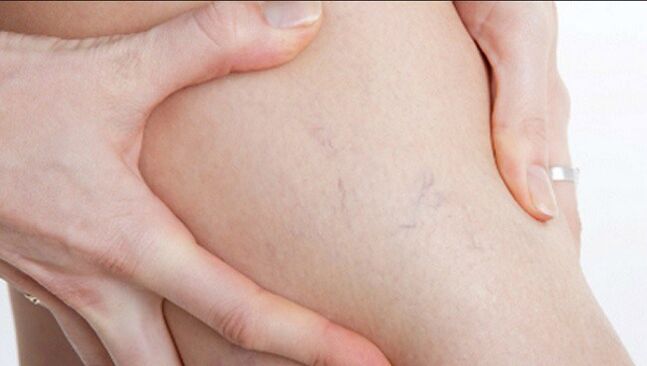
Many people mistakenly believe that varicose veins are avoided if men wear flat-soled shoes and do not bear children.From a physiological point of view, this is indeed the case.
But don't forget about other factors and reasons, such as carrying heavy objects, working hard in the gym, being overweight, genetic characteristics and lack of mobility.
In general, there are many reasons to encounter this disease.Varicose veins most commonly occur in men over the age of 40.It is accompanied by the following symptoms:
- Feeling of muscle stretching.
- Enlargement of the ankles and calves.
- The appearance of small ulcers on the legs.
- Aching and throbbing pain.
In general, the symptoms and treatment of varicose veins in men are similar to the condition in women.It's a good idea to look at photos of other people to understand what varicose veins look like.
What are the dangers and complications of the disease?
If no treatment is given, the pathology negatively affects the entire body.Varicose veins not only cause cosmetic defects (they are listed above), but also lead to more serious complications in the body:
- metabolic disorders;
- Eczema;
- the appearance of a blood clot;
- swelling of the legs;
- Lack of nutrients in cells and tissues;
- Skin pigmentation.
Increasing pressure causes blood to move increasingly slower throughout the body.Its blood clots lodge in the legs and affect the aesthetics of the legs of men and women.Meanwhile, toxic substances accumulate in the tissue and act as metabolic byproducts.
When you start treatment, there is a possibility that a more complex condition will develop - venous insufficiency.
There are various diseases that lead to the appearance of varicose veins: skin ulcers, eczema, profuse bleeding, obstruction caused by a blood clot, persistent swelling, skin dermatitis, disorders in the nutrition of cells and tissues of the legs, increased skin pigmentation.
4 possible diagnostic methods
Often people do not go to the doctor in the early stages of the disease.They attribute the apparent pain sensations to fatigue after physical work and to age-related changes, but not to varicose veins.
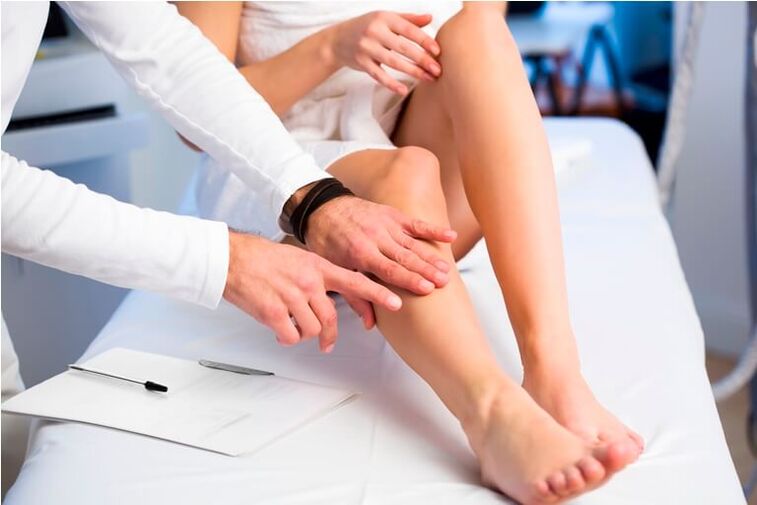
However, if the condition worsens and clear signs of varicose veins appear, people can be seen in the clinic more often.Often an experienced doctor is able to determine the presence of a disease based on symptoms and then prescribe treatment.
To confirm the diagnosis, additional diagnostic measures may be prescribed:
- Ultrasound Dopplerography.Such an examination is often prescribed for varicose veins.
- Phlebomanometry.With the help of such an event, internal venous pressure can be examined.
- Duplex scanning.This procedure will help determine the condition of the walls, as well as the valves.
- Phlebography.The doctor injects a special contrast dye into the veins, then an X-ray is taken, which helps examine blood flow and track how the blood moves through the veins.
There are other diagnostic procedures that a doctor may prescribe for severe cases of varicose veins.But often 1-2 events are enough.
Recommendations for prevention
One cannot do without adequate treatment of varicose veins;In practice, there have never been cases when the disease disappeared on its own.However, there are several ways to relieve symptoms and improve your general condition.
- Move as much as possible by exercising regularly.Change your posture if you feel tired.
- The first treatment measure is the choice of compression tights, which will return the condition of the legs to normal and improve their appearance.
- Take special baths in the evening.The fact is that showering in the morning can lead to fluid retention, poor circulation and pain.
- Pay attention to your lifestyle during pregnancy - eat right, eat more vegetables and fruits to prevent varicose veins.
Who is a phlebologist and how can they help?
At the first signs of varicose veins, you should contact a phlebologist who will make a diagnosis and prescribe treatment.At the initial stage, the doctor prescribes medications that alleviate the general condition and increase the tone of the veins.
However, if the disease has progressed, surgery to remove the enlarged vein is required.You then need to prepare for rehabilitation.
The main goals of treating varicose veins are as follows:
- relief of the inflammatory process;
- strengthening the venous wall;
- increased blood fluid;
- Treatment of complications.
Very often, doctors prescribe the following drugs for treatment when varicose veins are detected:
- Venotics.After use, the vein walls become more elastic, the structure is restored and blood circulation improves.
- Anticoagulants.They cause a reduction in blood clotting, which protects a person from the occurrence of blood clots.
- Various ointments and creams.They tone the affected area.
- Antiplatelet agents.Medications cause blood clots to dissolve.
Surgery for varicose veins
Some time ago, such treatment was very traumatic, but modern technologies have made it gentler.To remove veins, endoscopic devices are used that are inserted through a puncture.
With the exception of advanced cases, the operation (phlebectomy) is usually carried out under local anesthesia.There are practically no postoperative sutures.
When this disease is detected, sclerotherapy is often prescribed.This is a treatment in which a special drug with a sclerotic effect is injected into a vein.
This causes the walls of the veins to stick together, stopping blood flow.The procedure itself is carried out under anesthesia.Compression stockings are used after treatment.
The doctor may use radiofrequency coagulation to treat the disease.The operation itself is carried out using ultrasound, after which the reflux that occurs through the vein under the skin stops.After the procedure there is no need to stay in the hospital.
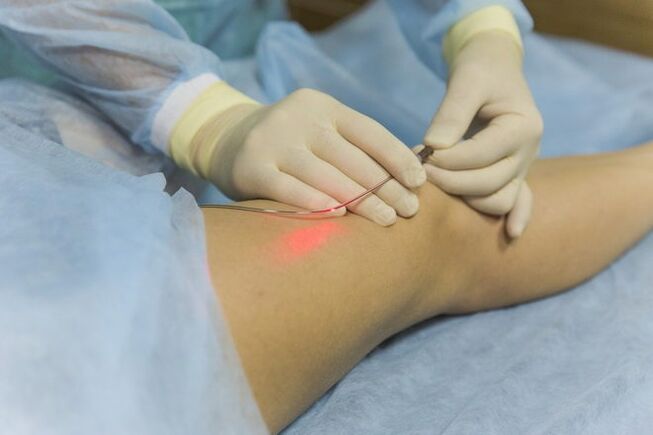
Among modern methods, laser treatment of varicose veins is popular.Prices depend on the type of clinic and the degree of illness.
Question – answer
What is the prognosis of this disease?
Unfortunately, this pathology is not so easy to treat.As practice shows, the disease develops again in 80% of people even after surgical removal.It is therefore important to start treating the disease as early as possible, even in its early stages.The prognosis in advanced cases is often disappointing and depends on comorbidities.
When should you go to the doctor to detect pathology in the early stages?
If your legs tire quickly, swell or feel heaviness, you should see a doctor.These are the first signals of the development of pathology.In the future, spider veins will appear, indicating constipation.
How important are exercises for varicose veins?
Gymnastics is an essential step in the treatment of pathologies and their prevention.Many people underestimate its benefits.By the way, many doctors recommend doing the “bicycle” exercise regularly, even if you don’t have any illness.This protects your legs from vascular problems.
Conservative therapy for varicose veins
Based on the causative factors in the development of the disease, the patient is prescribed certain treatment tactics:
- Choosing the optimal set of exercises to combat excess weight;
- Prescribing a course of therapeutic physical education;
- avoiding excessive physical activity;
- Carrying out massage events;
- adjustment of diet and regime;
- Taking special vitamin complexes.
To improve the condition of the lower extremities with varicose veins, the doctor may recommend that his patient wear compression clothing.You need to pay attention to your diet: it is better to exclude smoked, too fatty and fried foods.
Moderate physical activity such as cycling, running and even walking has a positive effect on this disease.If you have varicose veins, you should not go to the sauna.
The power of folk remedies for varicose veins
Green tomatoes prove to be beneficial for varicose veins.During the therapy, tomato slices are tied to the veins until ripe.
The popularity of this method lies in the fact that when it is hot, the veins begin to “buzz” and swell even more.At the same time, the tomatoes will begin to sing and it will not be difficult for you to find such a potion.

Datura seeds are also often used for home treatment.According to famous herbalists, they are effective remedies for combating varicose veins.
For therapy, an intoxicating vodka-based infusion is used, and special compresses are also made and applied to the sore legs.

An infusion based on horse chestnut and vodka.To do this, take two tablespoons of plant flowers, fill them with half a liter of alcohol and let them steep for two weeks.After passing the infusion through the mesh, you can take a tablespoon twice a day after meals.

Freshly squeezed juices from vegetables and fruits are useful not only for thinning the blood, but also for improving blood circulation, you can also read about this in reviews.The following mixtures are used for this: spinach, carrots, beets or carrots, celery, parsley.

If you decide to resort to proven traditional healing methods, you should consult a doctor.
Prevention
Preventive measures against varicose veins include the use of compression devices, controlling your own weight and avoiding cigarettes and alcohol.
You also need regular foot massages, increased physical activity, body hygiene measures, contrast showers and a proper diet.
You have to alternate between work and rest.When a person is sitting, you should not cross or place their legs on top of each other.The fact is that such postures interfere with normal blood circulation and lead to this disease.
If a person is forced to sit for a long time, he must periodically get up and change his position.
It is better not to wear tight underwear and clothing as they provoke varicose veins.Women's favorite high heels will not be of any benefit either.It is recommended to wear them less.
Expert opinion
- "Sclerotherapy is especially relevant in the initial stages of pathology development. Then this method shows remarkable results and no traces remain on the legs. Laser treatment is well tolerated by people, but after that they have to undergo minor rehabilitation. The person may experience bruising, pain and fever. However, these are temporary inconveniences. Doctors often prescribe NSAIDs. In rare cases they tend to resort to the surgical method."
- "If laser treatment was performed, patients are recommended to walk after it, but do not forget about compression stockings. The pathology itself does not pose a threat to human life, which cannot be said about the complications it provokes. For example, this disease can lead to thromboembolism. And this pathology often leads to death."
If left untreated, varicose veins can lead to complications.Therefore, if you want to maintain the beauty and health of your feet, pay attention to the slightest changes and consult a doctor immediately.
And it is even better to lead a lifestyle that protects you from pathologies.We wish you good health and well-being!